
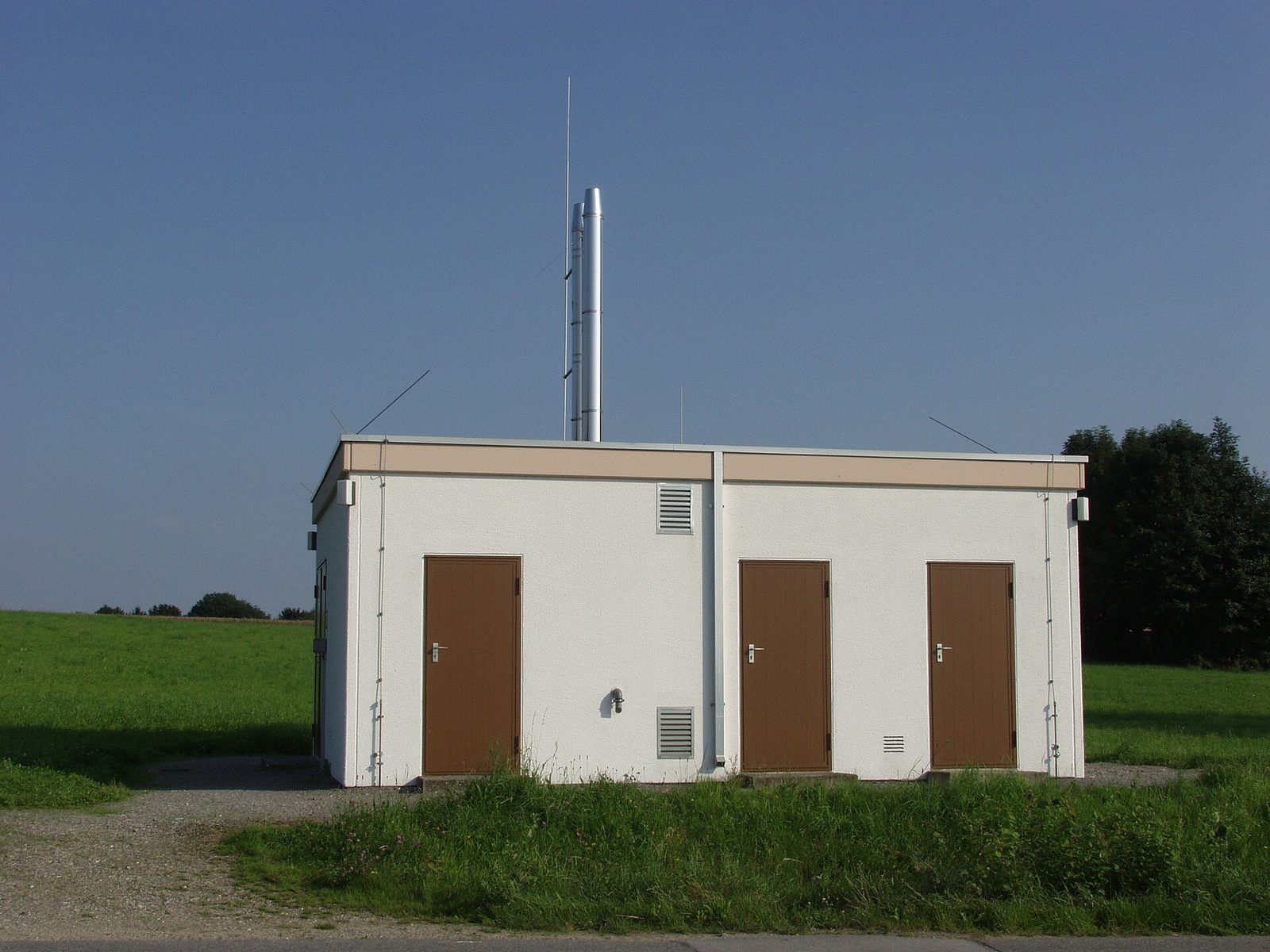
The bypass valve was still cracked open eight months after commissioning. Nobody noticed until the annual reconciliation, when the utility’s figures and the plant’s figures disagreed by 11%. The meter was fine. It had been fine the whole time. It was just measuring a fraction of the gas.
That story is not unusual. Most natural gas flow meter problems we get called about are not instrument failures. They are selection and installation decisions made early, in a meeting, by someone comparing catalogue prices.
Four numbers before any catalogue
Peak flow, minimum flow, operating pressure, line size. Get those four on paper and half the market eliminates itself.
Consider a boiler house serving two 6 t/h steam boilers — roughly 400 hp each. Peak demand might run 900 Nm³/h, about 530 scfm. At three in the morning, with one boiler on standby and a single pilot burner lit, demand drops to maybe 25 Nm³/h, or 15 scfm. That is a 36:1 turndown. Nothing in the standard product range covers it with one meter and holds accuracy at both ends.
Engineers who skip this step end up with a meter that reads beautifully at design load and produces noise at night. The control system then either ignores the low-flow period or starts logging phantom consumption.
What each type can actually do
| Meter type | Turndown | Accuracy | Pressure loss | Dirt tolerance |
|---|---|---|---|---|
| Gas turbine | 20:1 to 40:1 | ±1.0% to ±1.5% | Low | Poor — dirt erodes the rotor |
| Rotary (Roots) | 10:1 to 20:1 | ±0.5% to ±1.0% | Very low | Moderate — needs filtration |
| Precession vortex | 10:1 to 15:1 | ±1.0% to ±1.5% | Moderate | Good — nothing in the flow path |
The gas turbine flow meter earns its default status
On a clean, dry, filtered line, a gas turbine flow meter is hard to argue with. Rotor speed tracks velocity linearly across a wide band, which is where the turndown comes from. Put one behind a decent filter on a new steel main and it will hold calibration for years.
Put the same meter downstream of a thirty-year-old distribution network and the story changes. Pipe scale, compressor oil carryover, condensate slugs — the rotor wears, the K-factor drifts, and nobody notices until the numbers stop matching. We have seen turbine rotors lose two percent of accuracy inside eighteen months on unfiltered gas.
So the question is never “is a turbine meter accurate”. It is “what is upstream of it”. If you cannot answer that with confidence, look at the next option.
Rotary meters and the straight-pipe problem
A rotary gas meter is a positive displacement device. Two lobed rotors trap a fixed volume and count pockets. Because it measures volume directly rather than inferring it from velocity, swirl and short straight runs barely affect it. A rotary meter can sit close behind an elbow without a flow conditioner and still be correct.
In a metering station where the skid is a dense box of valves and the available straight run is whatever is left over, that property is worth more than a point of accuracy.
What you pay for it is mechanical wear. Rotors ride on bearings, and bearings have a service life. On continuous duty, plan a calibration interval of two years and keep a spare rotor set on the shelf if the point is used for billing.
Precession vortex: the choice that survives dirty gas
A precession vortex flow meter forces the gas into a vortex that precesses around the pipe axis at a frequency proportional to velocity. No bluff body sits in the stream. No bearing exists. Two of the most common field failures — erosion and mechanical wear — simply do not apply.
The trade is turndown. Below roughly ten percent of maximum flow the vortex signal gets hard to separate from pipe vibration, and the meter either stops counting or starts drifting. So we specify precession vortex where the load is reasonably steady: a gas-fired furnace, a heat treatment line, one large burner running most of the day.
Temperature and pressure compensation matters more than buyers expect here. An uncompensated volumetric meter on a line at 0.3 MPa and 40°C reads roughly 3.4 times the standard volume, and that factor moves with the weather. If the number goes into a bill or an audited energy report, specify the compensated version and calibrate the pressure transmitter as its own instrument.
Sizing, in the order that avoids rework
- Convert to standard conditions first. Nm³/h or scfm, not actual m³/h. A surprising share of sizing arguments are unit arguments wearing a disguise.
- Check velocity at peak. Natural gas at moderate pressure: keep it between 10 and 30 m/s (33 to 98 ft/s). Past 35 m/s the noise and pressure loss both climb fast.
- Test the low end against the turndown table. If minimum flow is under 5% of maximum, either run two meters in parallel with automatic changeover, or accept a wider accuracy band overnight.
- Count the straight pipe you actually have. Turbine and vortex want 10D upstream and 5D downstream as a starting point. Rotary needs far less. On a tight skid, this alone decides the type.
- Decide the output before ordering. Pulse to a local totaliser, 4-20 mA to a PLC, or RS485 Modbus to a flow computer. Retrofitting communications later costs more than the option did.
What we specify most often
City distribution point, 25:1 turndown, filtered dry gas: a gas turbine flow meter in DN50 to DN150, with corrected volume displayed from built-in temperature and pressure compensation.
Factory internal metering on a dirty line, where the number is for cost allocation rather than billing: a precession vortex flow meter sidesteps the erosion problem and costs less to own.
Compact skid, steady load, contractual volume basis: a rotary gas meter still holds its ground, especially where the pipe run is too short for anything inferential.
Three installation faults that keep recurring
Meter downstream of the pressure regulator. The regulator introduces turbulence and, on some designs, a temperature drop that condenses hydrocarbons onto the sensor. Give it 10D, or fit a straightening section.
Bypass left open through commissioning. The meter reads low for months and nobody notices until reconciliation. Fit a locked bypass and log its position.
Grounding skipped on the pulse cable. Long pulse runs next to VFD cable pick up counts. Shielded twisted pair, grounded at one end only, run under 100 m.
Frequently asked questions
Can one meter cover both custody transfer and internal allocation?
Technically yes. Practically it is a compromise. Custody points justify the higher accuracy class and the calibration certificate; internal allocation usually does not. Splitting the duty keeps capital cost sane.
How often should a natural gas meter be recalibrated?
Two years for billing points, three to four for internal monitoring. Shorten both if the gas is wet or carries particulates.
Is ultrasonic a better answer?
For large-diameter transmission lines at high pressure, yes — multi-path ultrasonic dominates that segment. Below DN200 the cost advantage disappears and installation sensitivity goes up.
If you are working through a station design and want a second opinion on meter type before the skid is fabricated, send the flow range, pressure, temperature and line size. You will get a type recommendation and a dimensional drawing, not a price list.
For the water side of the same plant, the meter selection logic is different enough that we wrote it up separately: flow meters for wastewater treatment plants. And if the gas is being burned to raise steam, the metering problem on the steam header is covered in BTU meter selection for heating and chilled water systems.