-
Email
arkellzheng@gmail.com -
Whatsapp
+8618852320787 -
WeChat
+8618852320787
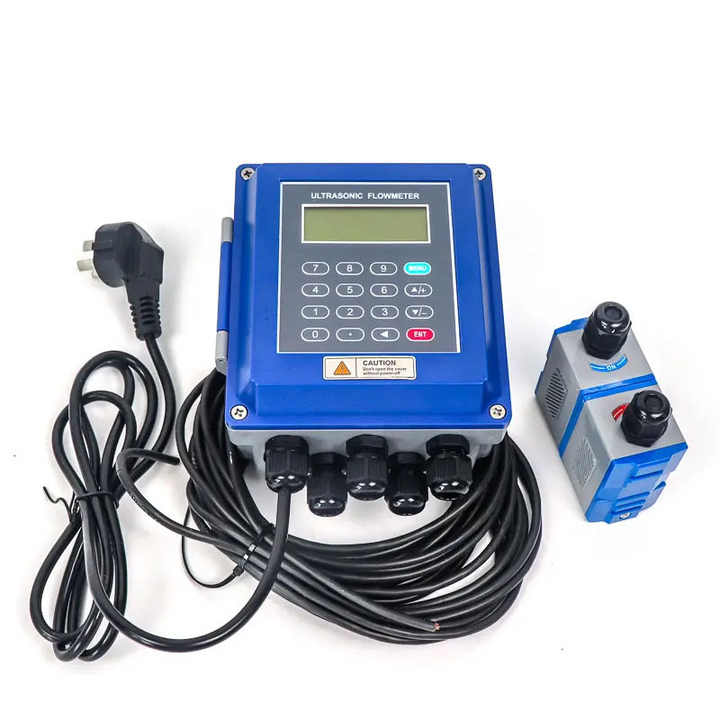
Ultrasonic flow meters time a sound pulse travelling with and against the flow. Because nothing sits in the liquid, they suit duties where a shutdown is impossible or the fluid will not tolerate an obstruction.
Can the line be shut down? If not, clamp-on is the only option and the decision ends there.
Then the fluid. Transit-time measurement needs a reasonably clean, single-phase liquid. Particulates scatter the signal and bubbles break it entirely. For slurry or wastewater, an electromagnetic meter is the better fit.
Then the pipe. Wall thickness has to be measured, not assumed from the schedule, because the computed internal diameter goes straight into the flow calculation. This is the single largest source of error in clamp-on installations.
Non-full pipes, heavy solids, and anything where the outside of the pipe is inaccessible or heavily insulated. If conductivity is above 5 microsiemens per centimetre, compare against the magnetic option first using our electromagnetic vs ultrasonic comparison.