
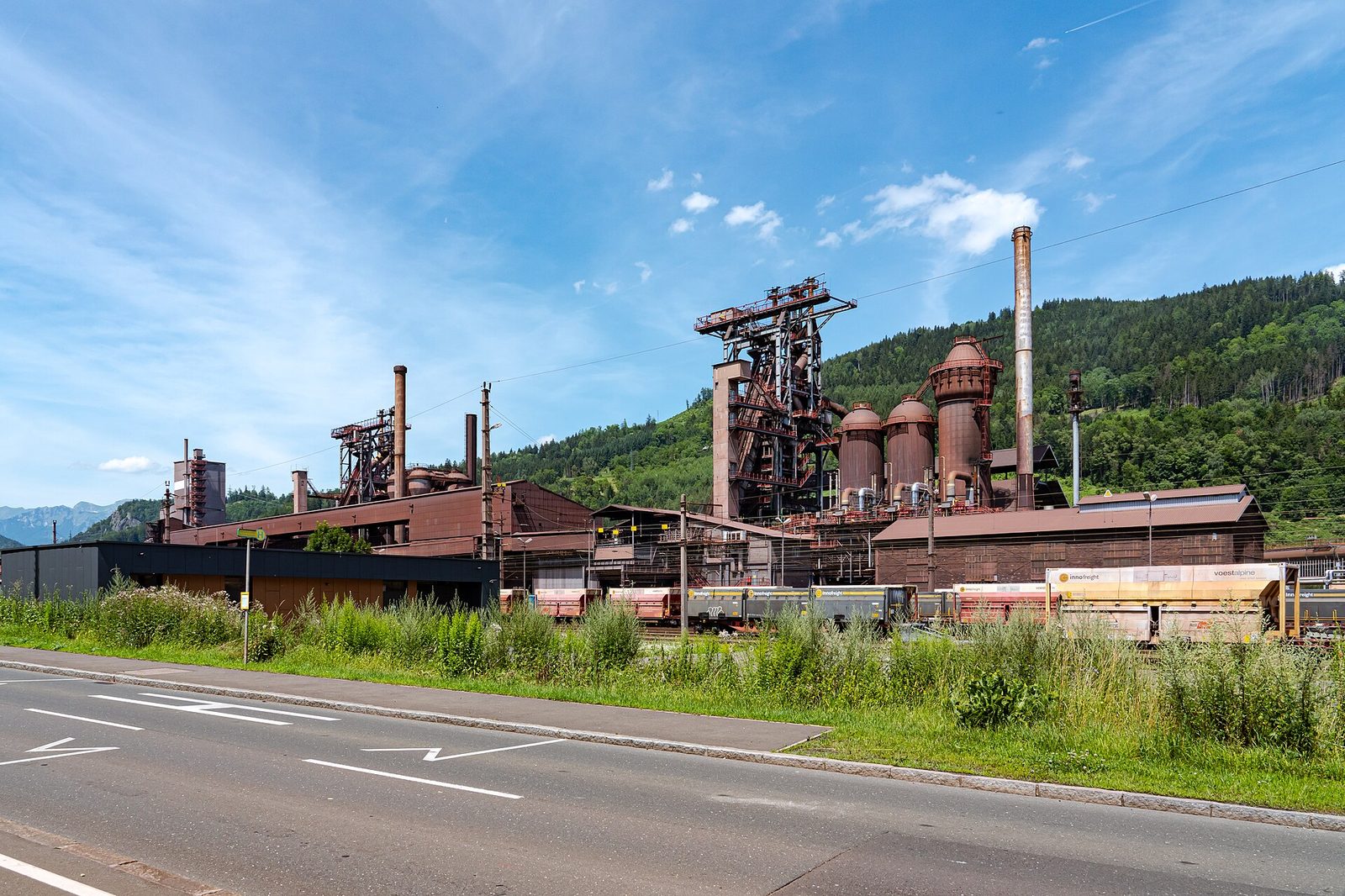
The differential pressure transmitter was reading 4.2 kPa. Steady. Plausible. It had been reading 4.2 kPa for eleven days, which was exactly how long the high-pressure impulse line had been plugged with dust.
Nobody caught it because the number never moved. A failing transmitter usually drifts or jumps. A plugged tap freezes, and a frozen reading looks like a stable process.
Steel plants meter more gas than most refineries, under worse conditions. Blast furnace gas arrives at 5 to 15 kPa gauge, saturated with water, carrying 10 to 40 g/Nm³ of dust — roughly 4 to 16 grains per scf — at 60 to 200°C depending on the tap point. Coke oven gas is wet, tar-laden and toxic. Converter gas is intermittent and explosive at the wrong air-to-gas ratio.
Every selection here starts with the same question: what is in the gas, and what happens to that meter when it deposits on the sensor.
Why the obvious answers fail
Turbine meters are out. A rotor in blast furnace gas becomes an abrasive slurry pump within a month.
Thermal mass meters are out on dirty gas. The sensor is a heated element; dust coats it and the calibration shifts. They work well on clean instrument air and natural gas, which is why they appear elsewhere in the plant.
Ultrasonic is out on dust-laden gas at atmospheric pressure. Attenuation is too high and the signal will not cross the pipe.
That leaves vortex, differential pressure, and in some positions an averaging Pitot arrangement.
Vortex meters on steel plant gas
A vortex flow meter has no moving parts and no small passages. The bluff body is the only intrusion and it is robust. Downstream of a dust catcher, a vortex meter with a hard-faced bluff body and remote transmitter gives years of service.
The constraints are real though:
- Minimum velocity. Vortex meters need roughly 5 m/s — 16 ft/s — to register reliably. On a low-pressure gas main at DN800 that is a large flow. Check actual velocity at minimum load before committing.
- Vibration. Steel plants vibrate. A vortex meter cannot distinguish pipe vibration from vortex shedding, and the error shows up as a high reading at low flow. Remote transmitter, vibration compensation, or a different technology.
- Wet gas. Condensate on the bluff body changes shedding frequency. Knock-out drum upstream, or accept the drift.
- Pressure loss. Roughly 1 to 2 kPa at design flow. On a 10 kPa main that is 10–20% of available pressure — a real operating cost.
Balanced orifice on dirty gas
The balanced orifice flow meter is the workhorse for blast furnace gas, coke oven gas and mixed gas mains. No moving parts. Taps large enough to survive dust. Insensitive to vibration. Turndown of 3:1 to 5:1, which matches the relatively steady flow of a gas main.
The multi-hole design solves the specific problem of the single-bore plate: it holds the flow profile stable at short straight runs, which matters where the gas main turns three times in twenty metres. It also cuts permanent pressure loss by roughly 30% against a concentric orifice at the same beta ratio.
Where it is the wrong answer: very low pressure mains where even 1.5 kPa of permanent loss is unacceptable; highly variable flow needing more than 4:1 turndown; lines that can carry liquid slugs, which produce a differential spike no damping will hide.
Keeping the taps alive
Impulse lines on dirty gas decide whether the installation succeeds. Rules that work:
- 20 mm taps, not 12 mm — three-quarter inch rather than half — sloped at least 1:12 back to the pipe.
- A condensate pot on each leg with a blowdown valve.
- Transmitter above the taps on gas service, below on liquid.
- Blowdown at every plant shutdown. A plugged tap does not drift, it freezes — which is worse.
Coke oven gas and the tar problem
Coke oven gas carries tar vapour that condenses below about 80°C. Any meter with a small passage plugs. Any impulse line plugs. The practical arrangement is a heated or traced tap run, a vortex meter with remote transmitter, and a temperature interlock that alarms if the gas drops below the tar dew point.
Do not use a standard orifice plate on raw coke oven gas. The bore edge collects tar, the discharge coefficient shifts, and the error grows one to two percent a month until the plate is cleaned.
Cooling water is a different discipline
The cooling circuits around a furnace or a continuous caster are large, wet and dirty. Blast furnace cooling water runs closed loops at 3 to 6 bar with moderate solids; caster secondary cooling runs open with mill scale carried through.
Electromagnetic flow meters handle both, provided the liner is chosen for abrasion rather than chemistry: hard rubber or polyurethane, 316L electrodes, and a regular electrode cleaning routine. On very large headers, DN1000 and above, an insertion electromagnetic meter is cost-effective if there is straight run.
The failure mode to design against is scale. Mill scale deposits on the electrodes and the reading falls off gradually. A meter with electrode fouling diagnostics, or a scheduled resistance check each quarter, catches it before the data becomes useless.
What we would specify
| Point | Line size | Type | Note |
|---|---|---|---|
| Blast furnace gas main | DN600–DN1400 | Balanced orifice, multi-hole | Large taps, condensate pots, blowdown schedule |
| BF gas to hot blast stoves | DN400–DN800 | Vortex, remote transmitter | Vibration compensation essential |
| Coke oven gas main | DN300–DN700 | Vortex, traced taps | Temperature interlock at tar dew point |
| Converter gas | DN800+ | Vortex or averaging Pitot | Interlocked with gas analysis |
| BF cooling water | DN200–DN600 | Electromagnetic, hard rubber | Quarterly electrode resistance check |
| Caster secondary cooling | DN150–DN400 | Electromagnetic, polyurethane | Abrasion resistance first |
| Instrument air | DN50–DN150 | Thermal mass | Clean gas, direct mass reading |
Safety, and why the meter is part of it
Blast furnace gas and coke oven gas are toxic and explosive. Meters on these lines need the appropriate hazardous area certification, and impulse lines need isolation valves operable without exposing anyone to the gas. On converter gas the metering system is usually interlocked with the gas analyser so the recovery path only opens inside a safe composition window. The flow meter is a safety function there, not just a measurement.
Frequently asked questions
Can a vortex meter handle blast furnace gas at 30 g/Nm³ dust?
Yes, with a hard-faced bluff body and remote transmitter. The dust passes; wear is on the bluff body edge, which changes the shedding coefficient over years. Calibration check every three years.
Why does our orifice meter read low after a shutdown?
Almost always a plugged high-pressure tap, or water in the low-pressure leg. Blow both legs down and re-zero the transmitter before suspecting the plate.
Is thermal mass usable on flue gas?
On clean dry flue gas after a scrubber, yes, and it gives a direct mass reading. On raw flue gas with dust and moisture, no.
Where the same plant also handles acids for pickling or effluent treatment, liner and electrode selection for corrosive chemicals is the relevant companion. For the paper mill next door, which shares the steam and water problems, see flow meters in pulp and paper mills.