
An electromagnetic flowmeter manual is the document nobody reads until something goes wrong, and then it is the only thing that matters. Most manuals are badly organised, so this page explains what the six sections contain and what to look for in each.
If you are looking for the manual for a specific model, the fastest route is the model and serial number on the nameplate. Send those two numbers and any supplier can produce the right document, because the wiring and the parameter list change between generations even when the outside of electromagnetic flowmeter manual looks identical.
On this page
What ships with the meter
A complete delivery should include four documents. The installation and operation manual, the calibration certificate, the wiring diagram for the specific electronics version, and a packing list with the serial numbers.
Missing documents are common on second hand and re-exported equipment. If the calibration certificate is missing, electromagnetic flowmeter manual is effectively uncalibrated for billing purposes even if it works perfectly, because the original K-factor is the reference everything else is compared against.
Keep the packing list with electromagnetic flowmeter manual file. It carries the serial number, which is what you need for every future spare part enquiry and every recalibration.
The calibration certificate
The certificate is the most important page in the electromagnetic flowmeter manual package and it is the one most often lost. It should contain six items.
The serial number and the model, so the certificate can be tied to the hardware. The nominal diameter and the liner and electrode materials, because a certificate for the right serial number with the wrong liner is a certificate for a different meter.
The calibration method and the reference used, which tells you whether the result is traceable. The flow points tested, usually five to eight across the range. The error at each point. And the uncertainty of the calibration rig.
A certificate that states only that electromagnetic flowmeter manual was calibrated is not traceable and will not satisfy an auditor. Ask for the full data sheet before you accept delivery, because chasing it after electromagnetic flowmeter manual is installed takes weeks.
Wiring and terminal assignment
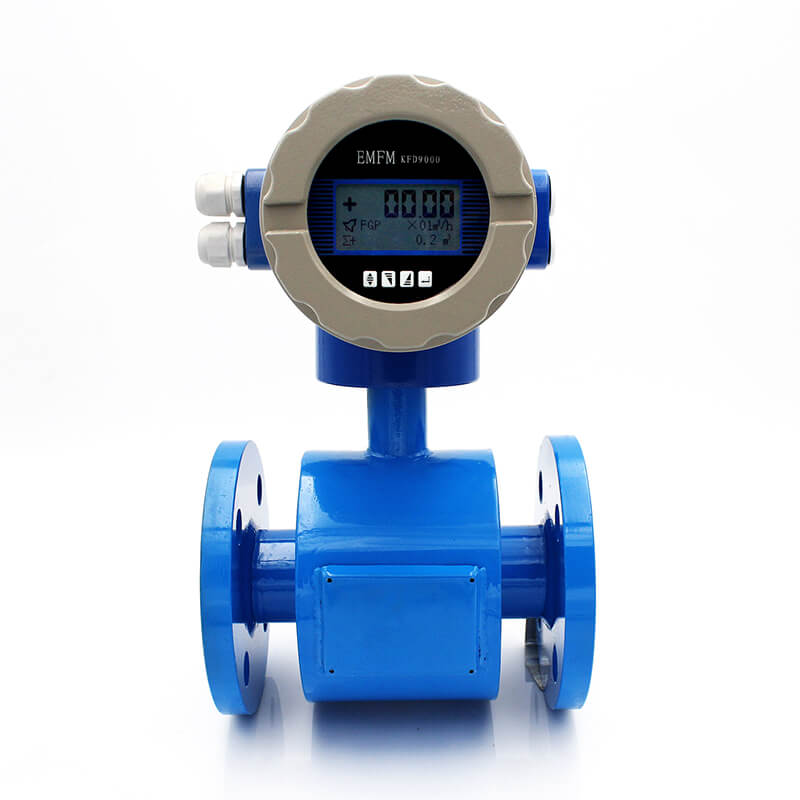
The wiring section varies more between models than any other part of the electromagnetic flowmeter manual. Terminal numbering is not standardised, and connecting a 24 VDC supply to a 4-20 mA output destroys the board.
Check three things before applying power. The supply voltage, which is printed on the nameplate and in the manual and is not always what the site provides. The output type, whether the loop is active or passive. And the earth terminal, which must be connected before the supply.
Remote versions have a separate signal cable between the sensor and the converter. That cable is driven with a low level signal and it must not be run in the same tray as power cables. The manual will specify the cable type and the maximum length, and both matter.
Where the manual gives a terminal diagram for more than one electronics version, match the version number on the converter label. Two converters that look identical from outside can have different terminal layouts.
The commissioning section
The commissioning section should cover the settings that have to be entered before electromagnetic flowmeter manual will read correctly. There are six, and skipping any of them produces a reading that looks plausible.
- Nominal diameter and the pipe schedule, which set the cross sectional area
- Full scale flow, which sets the 4-20 mA span
- Damping, which sets the response time
- Low flow cut-off, which sets where the output goes to zero
- Empty pipe detection, which must be enabled on a line that can drain
- Pulse output weight, which sets the resolution of the totaliser
Write the values you entered on a commissioning sheet and keep it with electromagnetic flowmeter manual. In five years, when the reading is disputed, that sheet is the only record of how electromagnetic flowmeter manual was configured.
The parameter list
The parameter list in a good electromagnetic flowmeter manual is a table with four columns: parameter number, description, range and factory default. The default column is the one that matters, because electromagnetic flowmeter manual that has been reset to factory defaults has lost its calibration-dependent settings.
Note which parameters are protected by a password and which are free. On most units the calibration parameters are locked and the display and output parameters are not. That distinction decides whether a technician can fix a display problem on site or has to send the converter back.
Photograph the parameter list after commissioning. A photograph of a working configuration is worth more than a page of text when a replacement converter arrives without one.
Error codes
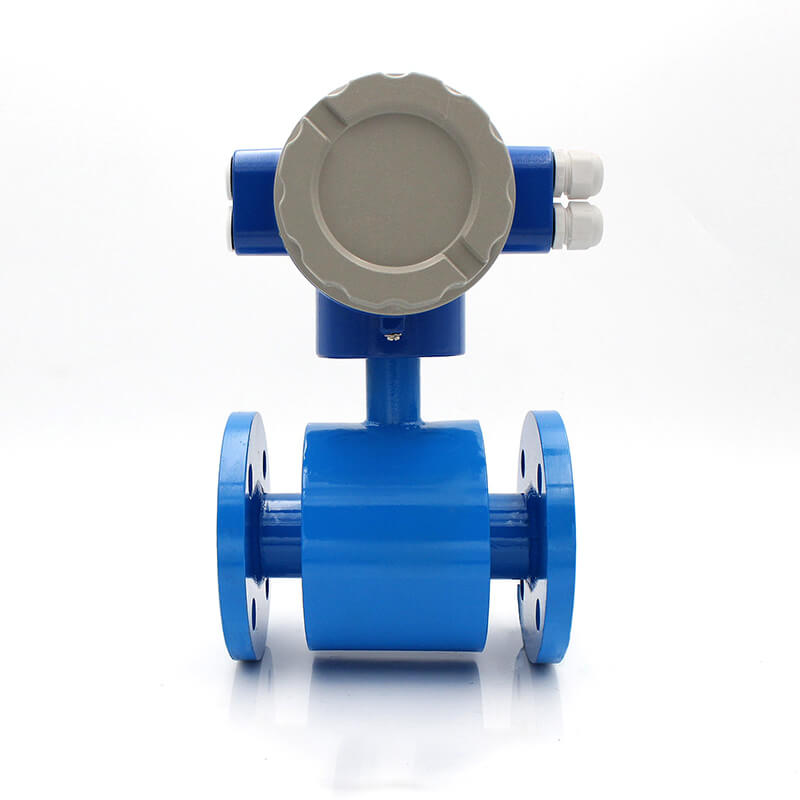
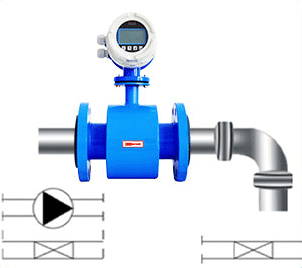
Most electromagnetic flowmeter manuals list error codes, and most of them are about the same four things: empty pipe, excessive noise, coil failure and electrode failure.
An empty pipe alarm with a full pipe is usually a grounding problem or a conductivity problem. Check the earth first, then the liquid. An excessive noise alarm is usually a partially empty pipe or a badly earthed installation.
A coil failure is a hardware fault and the converter has to be replaced. An electrode failure is sometimes a connection and sometimes a coated electrode, so check the resistance before condemning electromagnetic flowmeter manual.
The manual will give the expected resistance values. Measure them at the terminals with electromagnetic flowmeter manual isolated and compare. That single measurement separates a dead electrode from a wiring fault, and it takes two minutes.
Spare parts identification
Ordering a spare part starts with the serial number, not the model. Two meters of the same model with different liners use different gaskets, and two converters of the same model with different firmware revisions may not be interchangeable.
The parts list in the manual is organised by assembly. Sensor body, liner, electrodes, coil, converter, display board, terminal board. Order at the assembly level where possible, because individual components inside an assembly are usually not sold separately.
Keep one spare converter on the shelf for any critical meter. It is the part that fails without warning, and it is the part that a plant cannot fabricate on a Sunday.
Requesting the right document
When you ask for a manual, send five things. The model number from the nameplate. The serial number. The electronics version from the converter label. A photograph of the nameplate. And the language you need.
With those five, the correct document is usually a same day request. Without them, you get a generic manual for the current generation, which may have different terminals and a different parameter list from electromagnetic flowmeter manual in front of you.
If the nameplate is unreadable, send photographs of the converter, the terminal block and the sensor body. Most suppliers can identify a generation from the terminal layout, because that is what changes between revisions.
The installation section
The installation section is where most manuals are weakest, because it describes electromagnetic flowmeter manual rather than the installation. A good electromagnetic flowmeter manual gives you the five things you actually need on site.
The straight run requirement, with a drawing. Five diameters upstream and three downstream is the usual figure, and the drawing shows which direction counts.
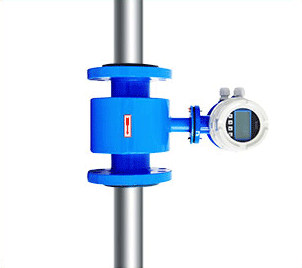
The orientation rules. Electrodes horizontal, pipe full, upward flow on a vertical line. Those three rules prevent most of the accuracy problems that get blamed on electromagnetic flowmeter manual.
The grounding requirement, with a diagram for a conductive pipe, a non-conductive pipe and a cathodically protected pipe. The three cases need three different arrangements and getting it wrong produces a reading that wanders.
And the torque figures for the flange bolts. Over-tightening distorts the liner and changes the bore, which changes the calibration. It is a two line table and it prevents a whole class of failure.
Remote and compact versions
A compact meter has the converter bolted to the sensor. A remote meter has a cable between them, and the manual for the two is not interchangeable.
The remote version adds three sections. The cable specification, including the type, the maximum length and the shielding requirement. The terminal assignment at both ends. And the ambient limits for the converter, which is now mounted somewhere else and may be in direct sun.
The cable length matters because the signal is small. A cable that is too long attenuates it and the reading becomes noisy at low flow. The manual will state the maximum, and exceeding it by a few metres is usually the difference between a working installation and electromagnetic flowmeter manual that reads zero at night.
If you are replacing a converter on a remote installation, check the cable type against the manual before you connect it. A replacement converter with a different input impedance may not work on the existing cable, and the symptom is a reading that looks like a grounding fault.
What a good manual looks like
Four things separate a usable electromagnetic flowmeter manual from a translated brochure.
It has a table of contents with page numbers and a real index of parameters. A manual where the parameter list is a photograph of a screen is a manual that cannot be searched.
It states the model and firmware version it applies to, on the cover. A manual without that information is a manual you cannot trust for terminal assignments.
It gives measured values rather than adjectives. Electrode resistance in ohms, coil resistance in ohms, insulation resistance in megohms. Those numbers are what turn a fault into a diagnosis.
And it has a troubleshooting flow that starts from the symptom. A manual organised by component is written for the supplier. A manual organised by symptom is written for the person standing in front of electromagnetic flowmeter manual at two in the morning.
Documentation for a second hand meter
A used electromagnetic flowmeter without paperwork is worth much less than one with it, and the difference is the calibration certificate rather than the manual.
Without the certificate you have no original K-factor, so you cannot tell whether the meter has drifted and you cannot prove its accuracy to anybody. The fix is a recalibration, which costs money and takes the meter out of service.
The manual is easier. Most suppliers will provide one from the model and serial number, and a photograph of the nameplate is usually enough. Ask before you buy, not after.
Check the liner visually before you accept a used meter. A liner that is worn, blistered or delaminated cannot be repaired economically, and a replacement liner often costs more than the meter is worth.
Why the version number matters
Electromagnetic flowmeter electronics change every few years, and the manual changes with them. The outside of the converter often stays identical while the terminal block, the parameter numbering and the menu structure all move.
That is why the version number on the converter label is the single most useful piece of information when you ask for documentation. A manual for the current generation applied to a ten year old converter produces two outcomes, and both are bad. Either the terminals do not match and the wiring is wrong, or the parameter numbers do not match and the commissioning is wrong.
The version is usually printed as a suffix on the model code, or as a separate firmware revision on a label inside the terminal cover. Photograph both labels when the meter is installed, because the inner label becomes unreadable after a few years in a damp chamber.
If the labels are gone, the terminal layout is the next best identifier. Photograph the terminal block with the cover off, and any supplier can usually narrow the generation down to one or two candidates.
Keeping documentation usable for fifteen years
electromagnetic flowmeter manual lasts fifteen years. The paperwork has to last as long, and in most plants it does not.
The failure mode is always the same. The certificate is filed in a project folder, the project folder is archived when the project closes, and five years later nobody can find it. The meter is still running and its calibration reference is gone.
Keep three copies. One in the plant maintenance file, indexed by tag number rather than by project. One scanned into the document management system. And one photographed and attached to the asset record, which is the copy that survives when everything else is lost.
Do that at commissioning, when the documents are in your hand. It takes twenty minutes and it is the difference between electromagnetic flowmeter manual with a traceable history and electromagnetic flowmeter manual with a number on a display that nobody can defend.
A five minute check before you file the manual
When a new meter arrives, run this check before the paperwork disappears into a folder. It takes five minutes and it catches the delivery problems while the supplier still owes you a response.
- Confirm the model and serial number on the nameplate match the packing list
- Confirm the liner and electrode materials on the certificate match the order
- Confirm the calibration certificate has flow points and errors, not just a stamp
- Confirm the manual version matches the converter label
- Confirm the wiring diagram is for your electronics version, not a generic one
- Photograph the nameplate, the converter label and the terminal block
- File the scanned documents against the tag number, not the purchase order
Every item on that list has caused a problem at some point. The liner mismatch is the worst, because electromagnetic flowmeter manual with the wrong liner for the duty fails in months and the certificate is the only evidence of what was actually supplied.
Common questions
Where can I download an electromagnetic flowmeter manual?
From the supplier, using the model and serial number from the nameplate. Generic manuals found online are usually for a different generation and often have different terminal assignments.
What should be in the calibration certificate?
The serial number, the diameter, the liner and electrode materials, the reference used, the flow points tested, the error at each point and the uncertainty of the rig. Without those it is not traceable.
Can I use a manual from a different model?
For general installation guidance, yes. For wiring and parameter lists, no. Those change between generations and the consequences of a wrong terminal are usually a destroyed board.
What is the most common commissioning error?
Leaving the nominal diameter at the factory default. electromagnetic flowmeter manual programmed for the wrong bore reads wrong by the ratio of the areas, and the error is large enough to be obvious only if somebody checks.
How do I identify a spare converter?
By the model, the serial number and the electronics version on the label. The version matters because the firmware and the terminal layout both change between revisions.
What if the nameplate is missing?
Photograph the terminal block and the sensor body and send those. Most suppliers can identify the generation from the terminal layout, and the liner can usually be identified from a photograph of the bore.
Related reading
For the meter itself, see the electromagnetic flow meter. If the manual does not answer the question, flow meter troubleshooting works through the symptoms in the order worth checking.
Reference for the standards behind the manual: ISO 20456 covers the calibration and installation requirements that a compliant manual should reflect.